Advice for the Executor of a deceased estate when dealing with a firearm
Gun ownership for legitimate purposes, such as the management of a family farm or other such rural property, is commonplace. When the registered owner of the firearm dies, the task of dealing with it generally becomes the responsibility of the Executor named in the deceased’s Will.
In South Australia, the laws surrounding firearms are extremely strict and generally, it is illegal to have possession of a firearm without a valid and current firearms license. This is dictated by the Firearms Act 2015 (SA) and its stringent regulations. The underlying principles of the Act is to confirm firearm possession and use as a privilege that is conditional on the overriding need to ensure public safety.
In accordance with the Act, a deceased estate Executor must:
- provide the Registrar, not more than 28 days after coming into possession of the firarm, with written notice in a form approved by the Registrar, giving details of the firearm and the circumstances in which the firearm has come into the Executor's possession;
- ensure that the transport or storage of the firearm is in compliance with the requirements of the Act; and
- dispose of the firearm, as soon as practicable (but no more than 28 days of coming into possession of the firearm), to a person authorised under the Act to have possession of it (for example a licensed firearms dealer) or by surrendering it to the Registrar.
Failure to meet such criteria could cause you to breach the Act and potentially expose yourself to legal ramifications, including criminal charges being brought against you.
Accordingly, you would be wise to seek legal advice prior to taking possession of, handling and storing any firearm (including ammunition) related to a deceased estate (despite your intentions being entirely innocent).
Fortunately, that same Act can provide you with a defence to a charge of possessing a firearm which you have come into possession of in the course of administering the estate of a deceased person (should you be a recognised Executor or Administrator to that estate). However, that defence is only applicable in the event you meet certain criteria including (but not limited to) those discussed here.
Should you find yourself in such a situation, we recommend speaking with one of our experienced solicitors who would be more than happy to assist with your enquiry should it either be solely related to the above scenario or an estate generally.
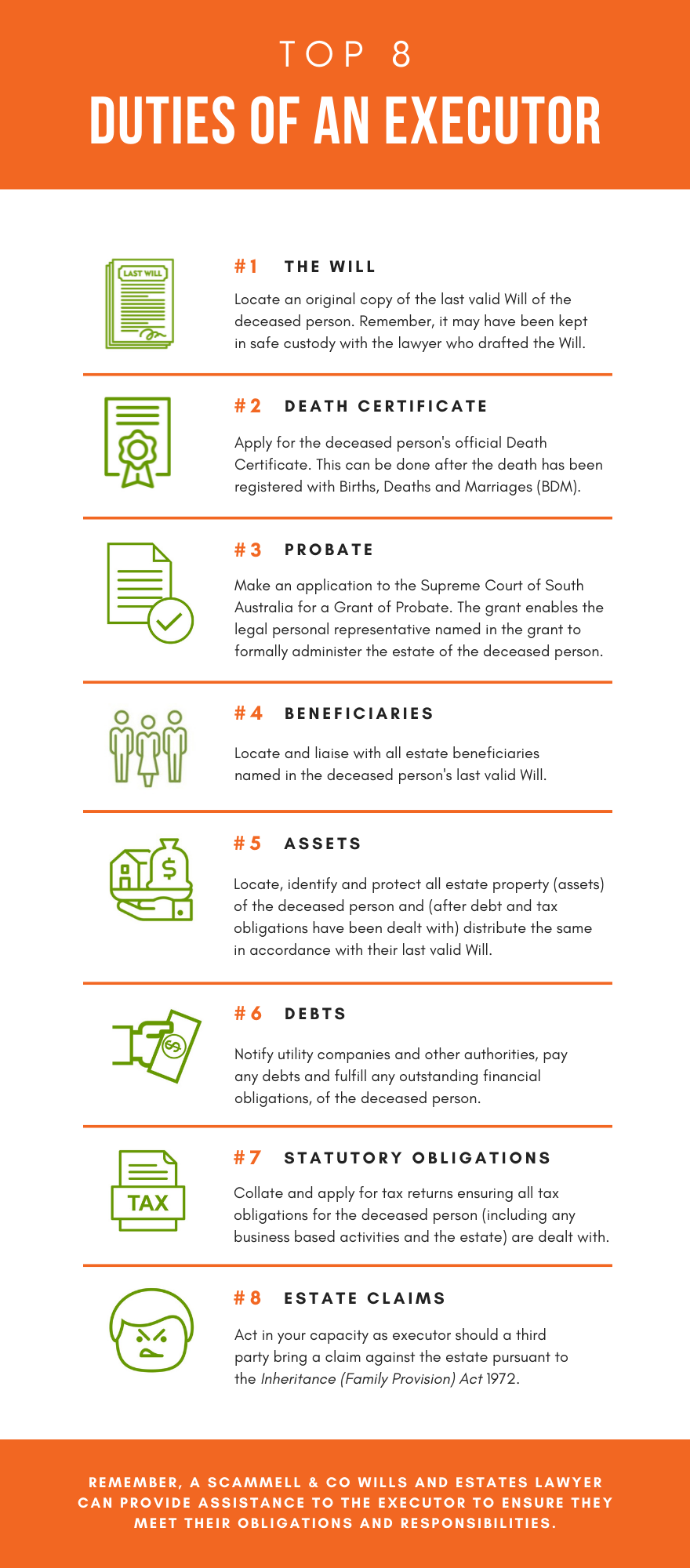
For further information about the responsibilities of a deceased estate Executor click here
*This information is current at the time of publication. For accurate legal advice, please contact Scammell & Co on 08 8440 270.