It is all too likely that you will eventually be nominated as an executor in a Will. You may be aware that you are an executor, but other times you may not. Usually you will find yourself with this responsibility following the death of your spouse, friend or close loved one.
However, what is not often considered is the time-consuming role you may unknowingly inherit once you have accepted your role as executor to an estate. Amongst other things, once you have accepted this role you will take on the responsibilities of administering the estate of the deceased which may include:-
This can be a particularly onerous and time-consuming role, and one which should not be taken lightly.
As an executor, you have a fiduciary duty to administer the estate properly and promptly which brings with that duty various risks including personal liability for making certain decisions and additional liability for various inactions.
Accordingly, it is important that should you become aware that you have been nominated as an executor in a Will or if you have been notified that you are an executor of an estate, then you should know what you are required to do following the death of the testator.
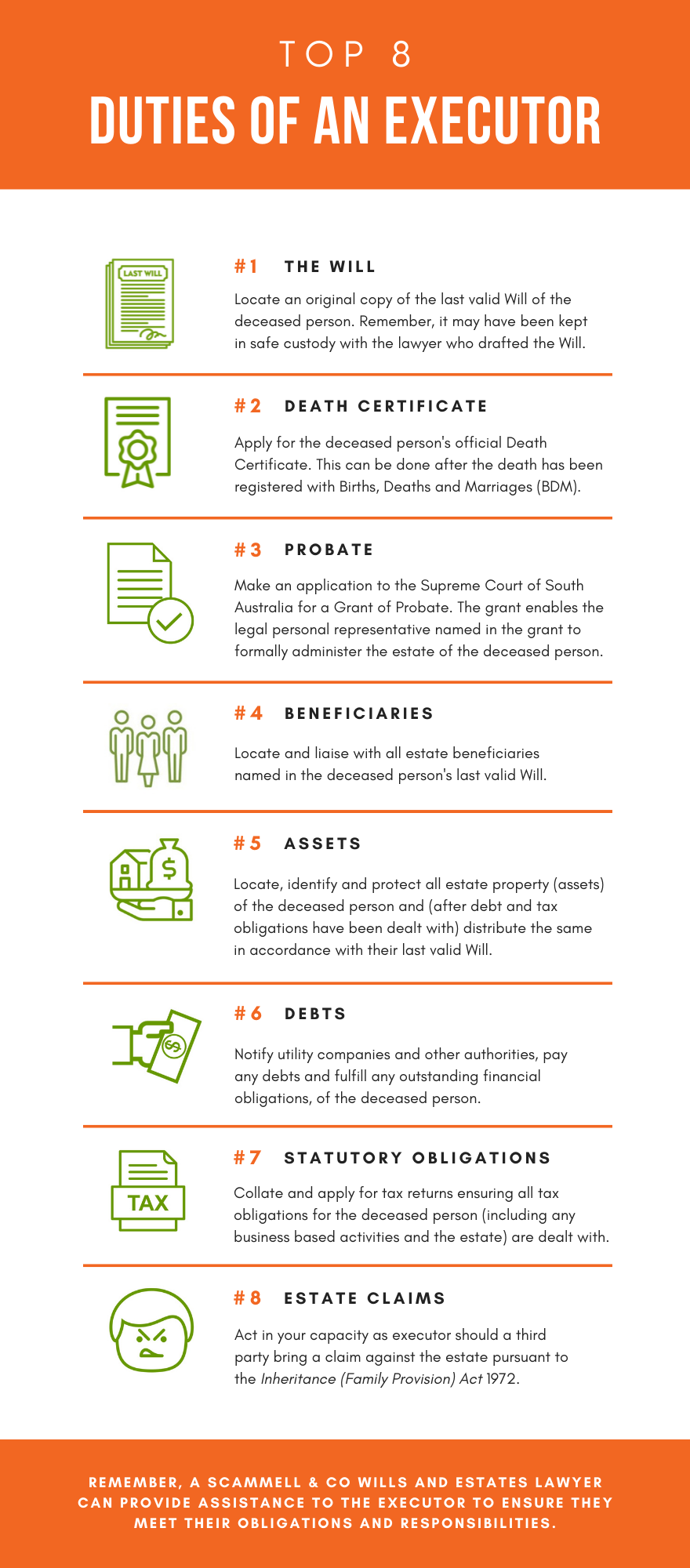
The top 8 duties of a deceased estate executor.
Scammell & Co have highly experienced solicitors to assist in estate administration, probate applications, estate advice and assisting executors to navigate their way through what is usually a difficult and confusing time.
Should you wish to discuss your position or enquire as to how we can help you, please do not hesitate to contact us.
For further information about our deceased estate administration services, please follow the link here
*This information is current at the time of publication. For accurate legal advice, please contact Scammell & Co on 08 8440 270.


